Address
E02 No.509 Floor 5 Unit3 Building1 No.1700 Tianfu Avenue North Section High-tech district Chengdu City Pilot Free Trade Zone China(Sichuan)
Work Hours
Monday to Friday: 9AM - 6PM
Weekend: 10AM - 5PM
Address
E02 No.509 Floor 5 Unit3 Building1 No.1700 Tianfu Avenue North Section High-tech district Chengdu City Pilot Free Trade Zone China(Sichuan)
Work Hours
Monday to Friday: 9AM - 6PM
Weekend: 10AM - 5PM



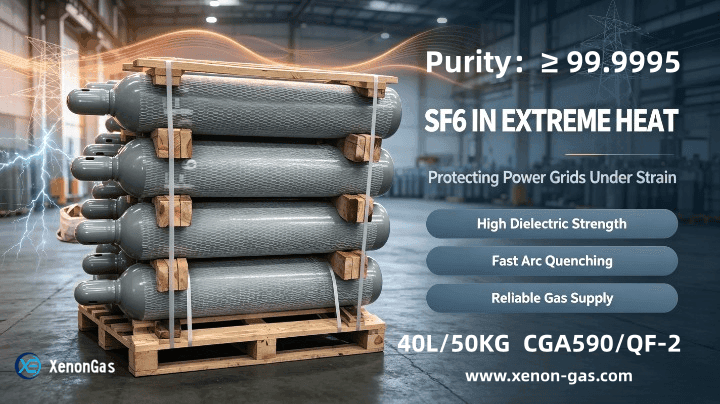
In the summer of 2026, an extreme heatwave that covered the entire globe continuously set new meteorological records in various regions: In the southwestern United States, the highest temperature exceeded 47℃ for 15 consecutive days. In the Iberian Peninsula of Europe, an extreme heat of 46.8℃ occurred. In parts of southern India, the surface temperature even exceeded 50℃. Over 60 countries have successively issued extreme heat red alerts.
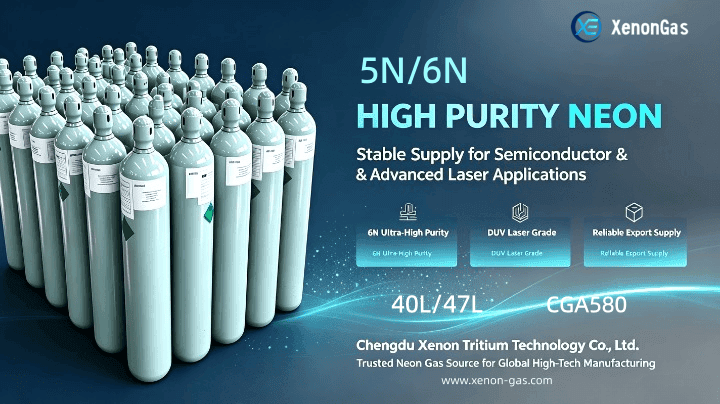
In 2026, neon gas is no longer a vulnerable link amid geopolitical conflicts, but has evolved into a resilient symbol of the global semiconductor industrial ecosystem. Supply will no longer rely on a single source, demand will no longer respond passively, and technology will no longer break through in isolation — the recycling loop, policy coordination, process optimization and material innovation are jointly building a stable ecosystem without central dependency.
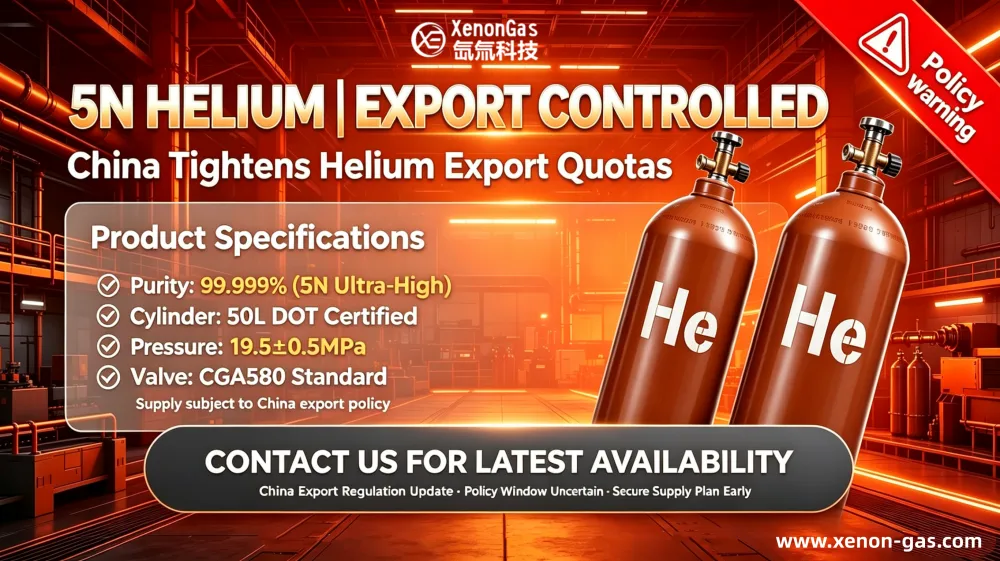
1. Policy Overview On July 10, 2026, China’s Ministry of Commerce and General Administration of Customs jointly issued an official announcement imposing a temporary export ban on helium gas under HS code 2804290010. The policy takes effect immediately with no…

As the core electronic gas for semiconductor etching, film deposition, and equipment chamber cleaning, Nitrogen Trifluoride (NF₃) is a key consumable material for chips, high-end panels, and photovoltaic manufacturing. Since 2026, the NF₃ industry has moved out of the stable and fluctuating operation range of previous years and entered a high-growth operation cycle characterized by supply contraction, high demand growth, firm prices, and capacity expansion and technological iteration. The following will analyze the core logic and future trends of the current market from four key dimensions.
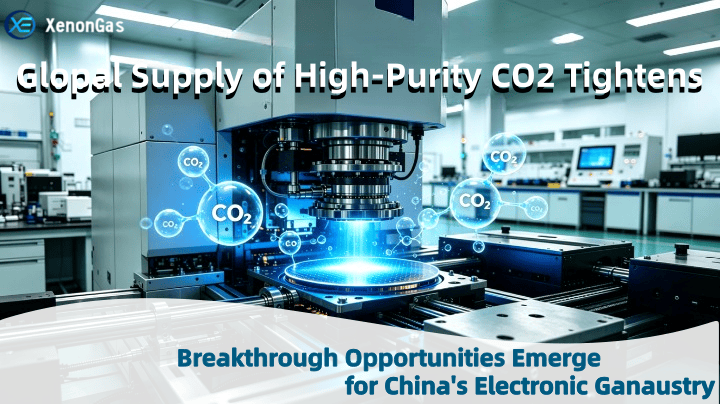
The global semiconductor manufacturing industry faces a structural supply-demand imbalance. After helium and fluorine-based specialty gases, 6N–7N ultra-high-purity CO₂ for advanced chip manufacturing has become another core consumable with medium-to-long-term structural supply shortages. Multiple industry institutions forecast the global supply shortfall of this material will reach 12%–15% by 2026.