Address
E02 No.509 Floor 5 Unit3 Building1 No.1700 Tianfu Avenue North Section High-tech district Chengdu City Pilot Free Trade Zone China(Sichuan)
Work Hours
Monday to Friday: 9AM - 6PM
Weekend: 10AM - 5PM
Address
E02 No.509 Floor 5 Unit3 Building1 No.1700 Tianfu Avenue North Section High-tech district Chengdu City Pilot Free Trade Zone China(Sichuan)
Work Hours
Monday to Friday: 9AM - 6PM
Weekend: 10AM - 5PM


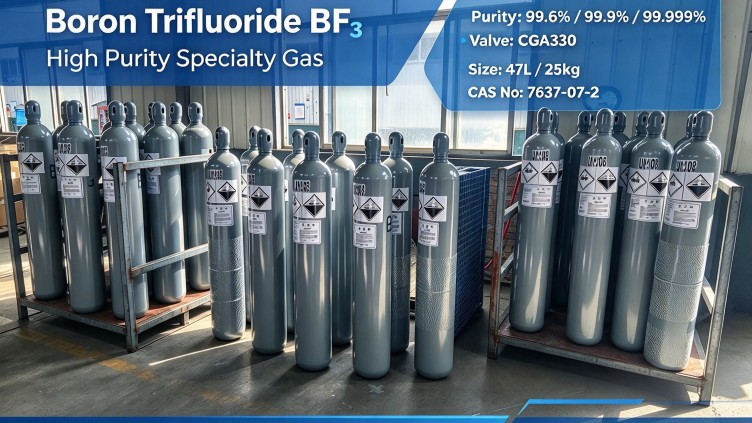
Boron trifluoride (BF₃) is a critical specialty gas widely adopted for P-type ion implantation in semiconductor manufacturing and as a Lewis acid catalyst for fine chemical and pharmaceutical synthesis.
Many procurement and process engineers rely heavily on COA purity data generated at the point of gas filling. However, one frequently overlooked failure mode emerges during long-distance ocean transportation: moisture-induced hydrolysis.
Boron trifluoride (BF₃) is a critical specialty gas widely adopted for P-type ion implantation in semiconductor manufacturing and as a Lewis acid catalyst for fine chemical and pharmaceutical synthesis.
Many procurement and process engineers rely heavily on COA purity data generated at the point of gas filling. However, one frequently overlooked failure mode emerges during long-distance ocean transportation: moisture-induced hydrolysis.
BF₃ is highly reactive with water vapor. Even trace moisture entering the cylinder or gas stream can trigger hydrolysis, producing hydrogen fluoride (HF) and silicon tetrafluoride (SiF₄) as impurities.
Chemical reaction reference: BF₃ + 3H₂O → H₃BO₃ + 3HF. HF may further react with siliceous materials to form SiF₄. This is basic inorganic chemistry knowledge, widely documented in public chemical handbooks.
For semiconductor fabs using BF₃ for ion implantation:
HF and SiF₄ contaminants can alter doping concentration uniformity on the wafer surface. Even minor impurity excursions can cause inconsistent electrical properties across dies, resulting in yield loss, unexpected parametric failures, and costly production downtime.
For chemical synthesis plants using BF₃ as a catalyst:
Newly formed HF changes catalytic activity and selectivity. Uncontrolled side reactions may reduce product purity and increase waste treatment burdens.
The challenge is not limited to gas quality at the time of production. The whole supply chain system — cylinder preparation, valve selection, filling environment, seal integrity, and storage conditions — jointly determine whether moisture contamination can be avoided over weeks of sea transit.
Our 5N Boron Trifluoride follows GB/T 14603-2025 Electronic gas — Halide gas, which sets strict limits including HF ≤ 0.1 ppm along with controlled levels of SiF₄ and metallic impurities. The standard requires BF₃ purity ≥99.999% and total impurity content ≤10 ppm.
Reference note: GB/T 14603-2025 is a national standard of China for electronic halogen gases, publicly available for standard metadata inquiry on the National Standards Information Public Service Platform.
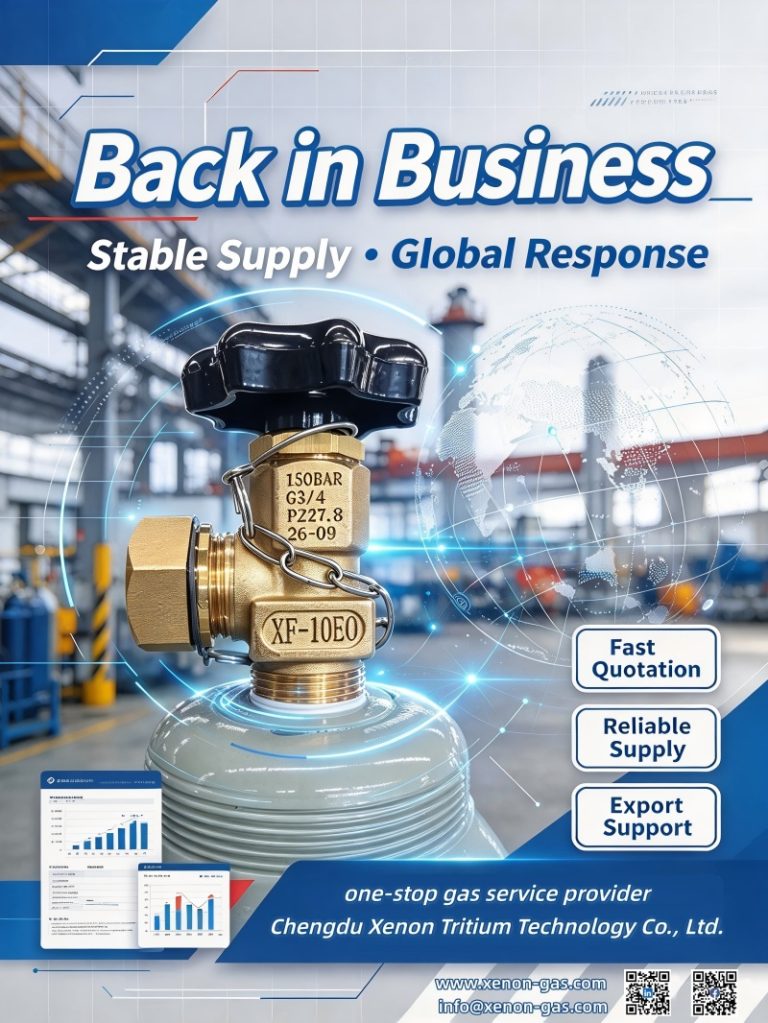
CGA330 valves are recommended for BF₃ service to maintain sealing performance and compatibility. 316L stainless steel cylinder bodies are recommended for semiconductor-grade BF₃ service.
We supply industrial grade and 5N electronic grade boron trifluoride for global customers. Our gas filling process implements strict dry atmosphere control to minimize the risk of moisture ingress. Every batch comes with test certification, and we provide full documentation packages for international dangerous goods logistics.
For more details on specification, COA data, and shipping arrangements, please contact our team.
#BoronTrifluoride #BF3 #SpecialtyGas #IonImplantation #SemiconductorManufacturing #ElectronicGas